3 min read
“A Campus For The People”: Eric Wowoh and Lofa County University Turn Over $400,000 CAN University Facility To Expand Rural Higher Education Access in Lofa
BY: Joseph Titus Yekeryan
New Annex in Fessibu Town Aims to End Decades of Distance and Poverty Barriers For Students in Salayea, Zorzor and Surrounding Communities
FESSIBU TOWN, Lofa County — In a Historic step for rural education, Opportunity Network Liberia (ONL Inc.) officially turned over the Change Agent Network (CAN) University facility to the Government of Liberia through Lofa County University, establishing a new annex campus in Fessibu Town to serve students across northern Lofa.
 The transfer, valued at nearly US$400,000, was hailed by officials and residents as one of the most significant educational developments for rural Liberia in recent years.
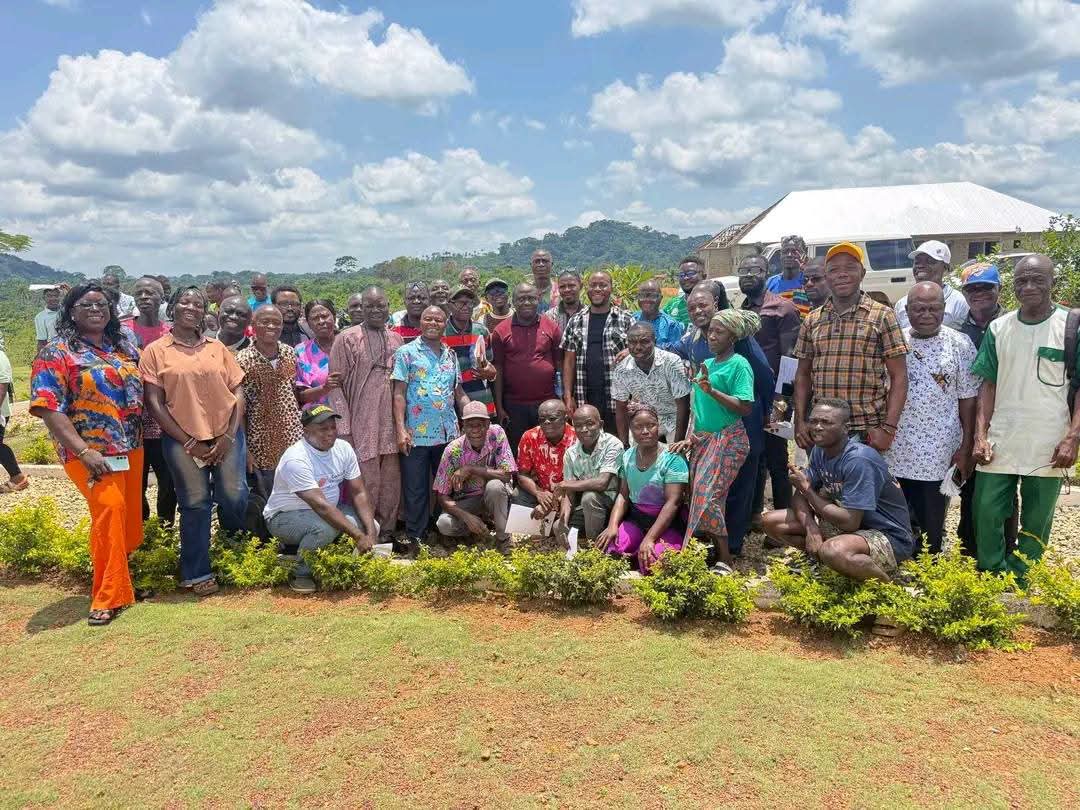
Thousands of citizens, students, elders, educators, and government officials gathered for the ceremony, describing it as the restoration of opportunity for young people long cut off from higher education by poverty and distance.
For decades, students in Salayea, Zorzor, and surrounding districts faced a 75–80 kilometer journey to Lofa County University’s main campus in Voinjama — a trip many families could not afford.
 “Brilliant students were left behind not because they lacked intelligence or potential, but because poverty and distance stood in their way,” residents said during the ceremony.
“This is not simply about buildings,” one community member said. “This is about changing the future of our children and our country.”
For his part, the Founder and CEO of ONL Inc., Eric W. Wowoh said, the project was driven by requests from young people seeking access, not luxury.
“When the young people came to me, they were not asking for luxury.
They were asking for a chance. They were asking for access.
They were asking for the opportunity to become who God created them to be,” Mr. Wowoh said.
He recounted parents selling belongings to send one child to school, and gifted students abandoning dreams because of transport costs to Voinjama.
“We did not build this institution for ourselves, We built it for Liberia, We built it for the next generation, We built it because we believe that every Liberian child — whether born in Monrovia, Fessibu, Salayea, or Zorzor deserves access to quality education,” he added.
Mr. Wowoh said ONL Inc. received no financial gain from the turnover and pledged continued partnership with the university and government to secure further support.
“This turnover does not mean we are walking away. It means we are stepping into a greater partnership for national development,” he stated.
Meanwhile, Dr. Isaac P. Podah, President of Lofa County University, called the annex “an extension of opportunity, progress, and national advancement.”
“There are too many young people in rural Liberia whose dreams have been interrupted — not because they lack ability, but because they lack access,” Dr. Podah said.
“Decentralizing higher education is essential to rebuilding Liberia and ensuring that no region is left behind.”
Yanquoi Dolo, Mayor of Salayea however, described the project as one of the greatest educational breakthroughs our district has witnessed in years.
“For too long, our students have suffered simply because education was too far away.
Today, opportunity has come closer to our people. When education moves closer to the people, development follows,” Mayor Dolo said.
Also speaking, Rep. Augustine B. Chiewolo praised the initiative as “true patriotism in action” and urged citizens to protect the facility.
“Too often we focus on what Liberia lacks. But today, we are witnessing what becomes possible when Liberians believe in Liberia and invest in Liberia,” Rep. Chiewolo said.
Officials said the Fessibu annex will immediately expand access to tertiary education for students in western Lofa and could serve as a model for similar partnerships in other underserved counties.
For residents of Fessibu, Salayea, and Zorzor, the new campus represents more than infrastructure.
It represents dignity, possibility, and what community leaders called “the promise that no Liberian child should be denied education because of where they were born.”