5 min read
BOAKAI COMMENDS FINANCE MINISTRY FOR BUDGET DELIVERY AS GDP GROWS TO 5.1%, WARNS OTHER GOVERNMENT INSTITUTIONS AGAINST DELAYS AND EXCUSES
BY: Rufus Divine Brooks Jr.
MONROVIA,— President Joseph Nyuma Boakai has praised the Ministry of Finance and Development Planning for what he described as improved performance in managing public finances and executing the national budget, while warning other government institutions that excuses and delays will no longer be tolerated.
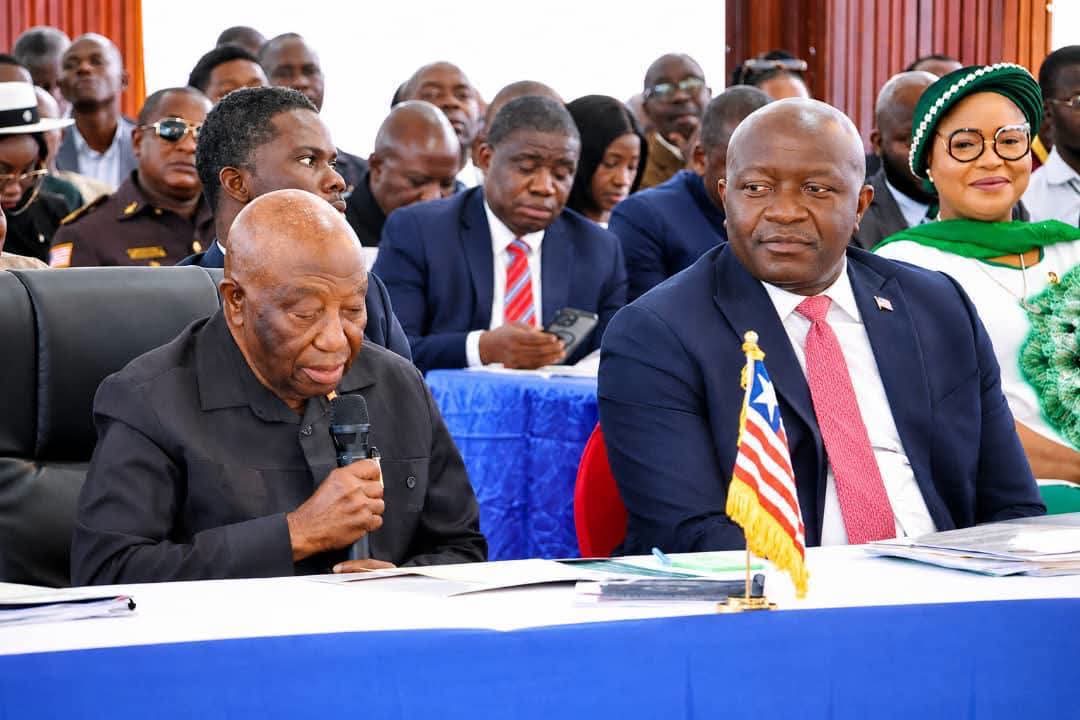
President Boakai made the remarks Tuesday while chairing a meeting of the National Steering Committee on the implementation of the ARREST Agenda for Inclusive Development (AAID), where he called for greater accountability and faster delivery of programs intended to improve the lives of Liberians.
The President’s recognition of the Finance Ministry was one of the highlights of the meeting.
On the ministry’s traditional role of controlling government spending and balancing the budget, Boakai said its performance has improved.
“I used to say, the Ministry of Finance, they cut your money, they balance the budget, and leave you with the prior budget in the balance,” President Boakai emphasized. “But today, today, I think they are delivering.”
He described the ministry as a responsible user of public resources and said the government must be willing to recognize institutions and officials that are producing results.
“We have made progress, we must admit,” the President asserted.
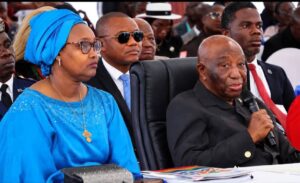
But President Boakai quickly shifted from praise to a broader warning: progress in some parts of government cannot make up for poor performance elsewhere.
He said some ministries are achieving more than others because their leaders are putting in greater effort and using better strategies.
The President warned that delays in implementing projects, weak coordination, institutional bottlenecks and poor reporting are undermining the government’s development agenda.
“All institutions are hereby on notice to implement the full range of our sector interventions without further delay,” he stressed.
‘You Cannot Prevail Without Effort’
President Boakai also used the gathering to make a broader appeal for personal and national responsibility.
He indicated that Liberia’s progress cannot depend entirely on government, development partners or foreign assistance. Citizens, he said, must also take responsibility for the country they want to see.
“You cannot prevail without effort,” Finance Boakai underscored.
He pointed to everyday actions from keeping communities clean to maintaining public facilities as examples of how citizens can contribute to national development.
For the President, the success of the government should ultimately be measured by what people experience in their daily lives.
He said the opening of a road, a clinic or access to better services can have a profound impact on communities.
“You do not know how much the people of the country feel when you open a road,” he said.
The same, he added, applies to improving healthcare, expanding education, providing clean water and creating jobs.
Finance Minister Ngafuan Reports Stronger Economic Performance
Speaking earlier, Finance and Development Planning Minister Augustine Kpehe Ngafuan told the gathering that Liberia’s economic performance has continued to improve despite a challenging global and fiscal environment.
He disclosed that real GDP growth increased from 4.0 percent in 2024 to 5.1 percent in 2025, with growth projected to reach 5.5 percent in 2026.
GDP per capita rose from US$849.30 in 2024 to US$861 in 2025 and is projected to reach US$961 this year, putting Liberia closer to the ARREST Agenda’s target of US$1,050 by 2029.
Finance Minister Ngafuan also reported an improvement in Liberia’s debt position. The debt-to-GDP ratio declined from 56.1 percent in 2024 to 54 percent in 2025 and is projected to fall further to 49.6 percent in 2026.
Domestic revenue collection has also increased, rising from US$699 million in 2024 to US$848 million in 2025 and reaching US$761.1 million by June 2026.
The minister continued that the performance puts the government on course to achieve its US$1.3 billion domestic revenue target for 2026.
Still on the economy’s performance, Finance Minister Ngafuan cautioned that strong economic indicators mean little if they do not improve the lives of ordinary Liberians.
“Macroeconomic stability is only one part of the development equation,” he indicated.
He stressed that the real measure of progress is whether economic gains translate into better public services, more jobs, greater investment opportunities and improved living conditions.
UN Calls for New Approach to Development Financing
For her part, United Nations Resident Coordinator Christine N. Umutoni, who serves as Deputy Chair of the AAID National Steering Committee, welcomed the progress while urging Liberia to rethink how it finances development.
Ms. Umutoni disclosed the country must gradually move beyond dependence on traditional development assistance and build a broader financing model that brings together domestic resources, private investment, climate finance, innovative financing and stronger partnerships.
“The question can no longer be only, ‘Who will fund the development programs?’” Ms. Umutoni disclosed. “It must increasingly be: ‘How do we structure these development programs so different sources of capital can finance them?’”
She called for Liberia to identify a limited number of major national investments in areas including human capital, economic transformation, food systems, digital development and climate resilience.
Rather than spreading resources across numerous small projects, she urged the government and its partners to focus on transformational investments capable of producing results at scale.
Ms. Umutoni insisted that Liberia’s young population, natural resources, peace, democratic resilience and growing international profile give the country a strong foundation for attracting investment.
Challenge: Turning Plans Into Results
Tuesday’s meeting ultimately came down to one question economic growth while improvements in key economic indicators can signal greater stability and stronger prospects for investment, the real test is whether those gains translate into better living conditions for ordinary Liberians. That means creating more jobs, expanding access to reliable public services, improving infrastructure, and ensuring that economic opportunities reach communities across the country not just those in the capital or at the top of the economy.