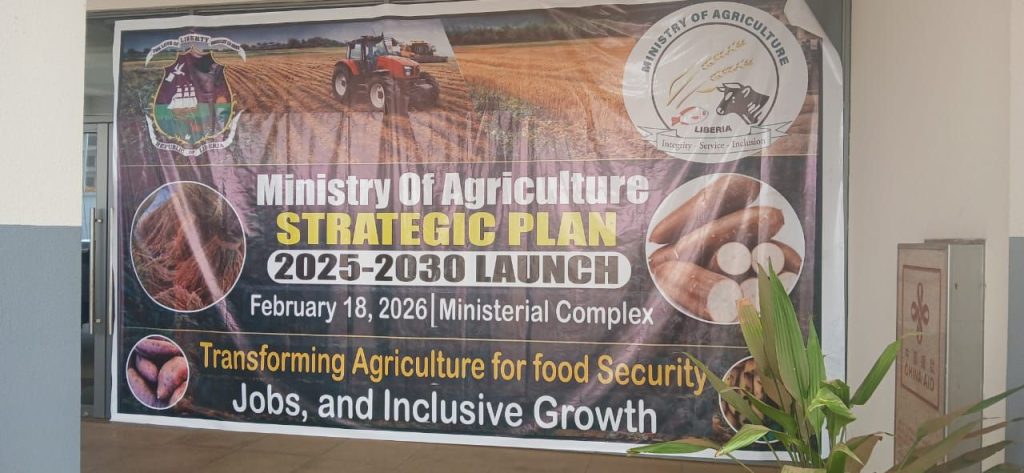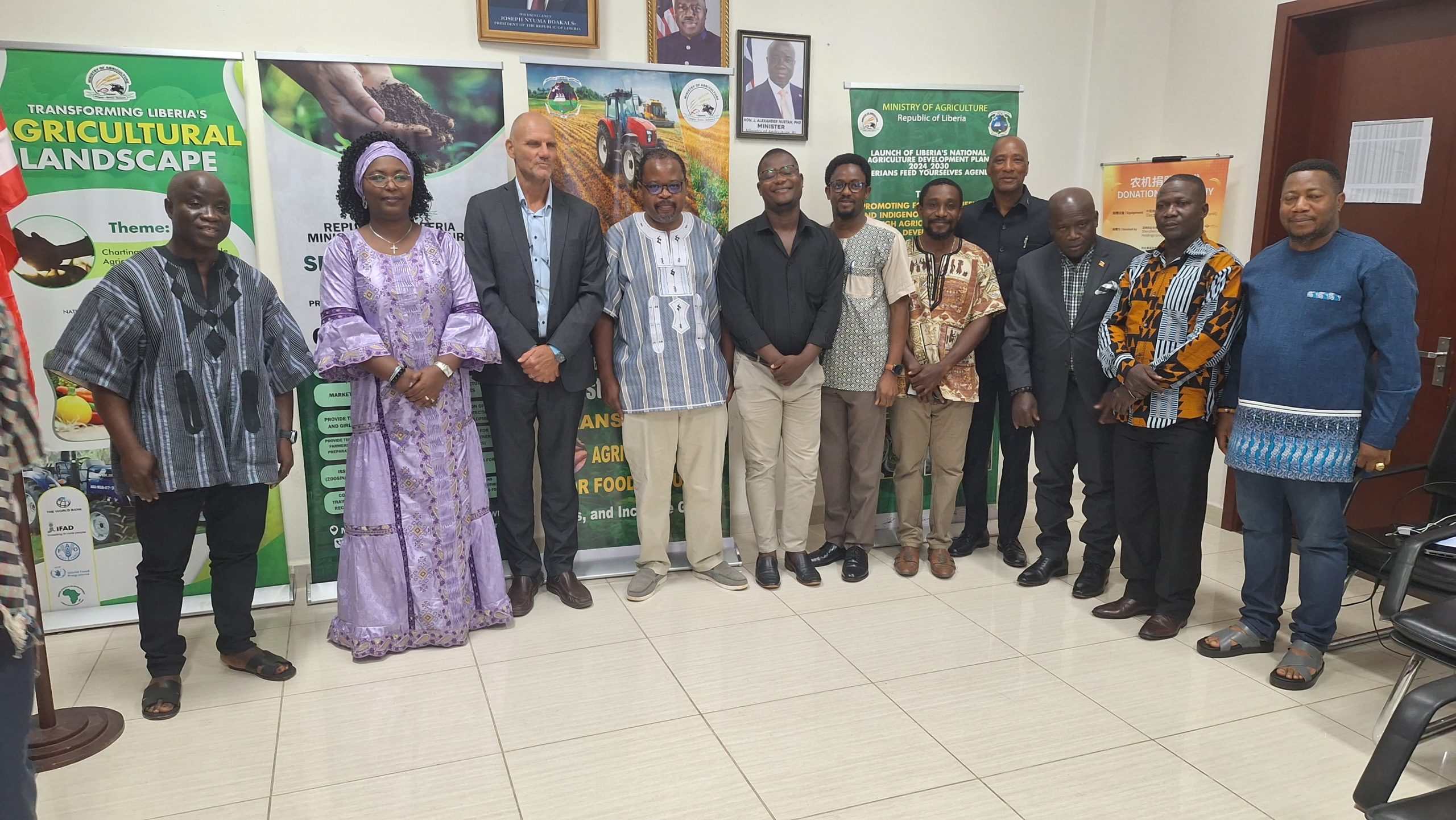
The Ministry of Agriculture has launched its Corporate Strategic Plan 2025 to 2030 under the theme Transforming Agriculture for Food Security, Jobs, and Inclusive Growth. The five-year plan will guide the Ministry’s priorities, programs, and institutional reforms from 2025 to 2030.

Delivering remarks at the launch, Dr. J. Alexander Nuetah described the Strategic Plan as a turning point for Liberia’s agricultural sector. He explained that the document is designed to move the country from subsistence to sustainability, from fragmentation to coordination, and from dependency to self-reliance.
The Minister noted that the Corporate Strategic Plan is aligned with the national agriculture development agenda and the vision of President Joseph Nyuma Boakai, which emphasizes food self-sufficiency and national prosperity. He stressed that the plan is practical, measurable, and accountable, and will serve as a guiding framework for implementation over the next five years.
The Strategic Plan is built around five key pillars: ensuring food and nutrition security; building competitive and inclusive agribusiness; strengthening research, innovation, and extension services; protecting land, forests, and water resources; and reforming and strengthening institutional systems within the Ministry.
According to the Minister, agriculture remains the backbone of Liberia’s economy and the primary source of livelihood for more than half of the population. Despite the country’s vast arable land, abundant rainfall, and youthful population, Liberia continues to import a significant portion of its food. He emphasized that the challenge lies not in potential, but in implementation, coordination, investment, and accountability.
To increase domestic production, the Ministry plans to expand the cultivation of rice, cassava, vegetables, livestock, and fish. Key interventions include improved access to quality seeds, expansion of mechanization services, strengthening extension delivery systems, promoting irrigation and climate-smart practices, and reducing post-harvest losses through improved storage and cold chain facilities.
The plan also seeks to unlock agribusiness and attract private-sector investment by promoting agro-processing, strengthening agricultural value chains, expanding access to finance, and creating a favorable investment climate. Government efforts include the establishment of 13 agricultural mechanization centers across the country and the development of aggregation centers to support small and medium-sized enterprises.
Youth and women empowerment forms a central component of the strategy. With 65 percent of Liberia’s population under the age of 25, the Ministry has signed memoranda of understanding with eight universities and community colleges to train future master farmers. A national forum for women and youth in agriculture is scheduled for 2026 to explore strategies for increasing their participation and leadership in the sector.
Addressing climate-related challenges, the Ministry plans to promote climate-smart agriculture, agroforestry, biodiversity protection, and responsible management of natural resources. Farmers are being encouraged to expand lowland rice production and adopt sustainable practices for tree crops to enhance resilience.
Internally, the Ministry has committed to institutional reform aimed at improving performance and transparency. Measures include digitizing systems, strengthening monitoring and evaluation frameworks, ensuring transparency in budgeting, and enforcing zero tolerance for corruption.
The Ministry called on development partners to align their support with the new strategy and adopt a more coordinated approach to implementation. The private sector was encouraged to invest confidently in agriculture as a viable business opportunity, while civil society and the media were urged to play their oversight roles constructively.
The launch of the Corporate Strategic Plan 2025 to 2030 marks a significant milestone for Liberia’s agricultural sector, signaling a renewed commitment to food security, job creation, and inclusive economic growth.