3 min read
Porkpa, Tewor, and Kungba Districts Endorse Landmark Community Action Plans to Drive Peace, Governance, and Development
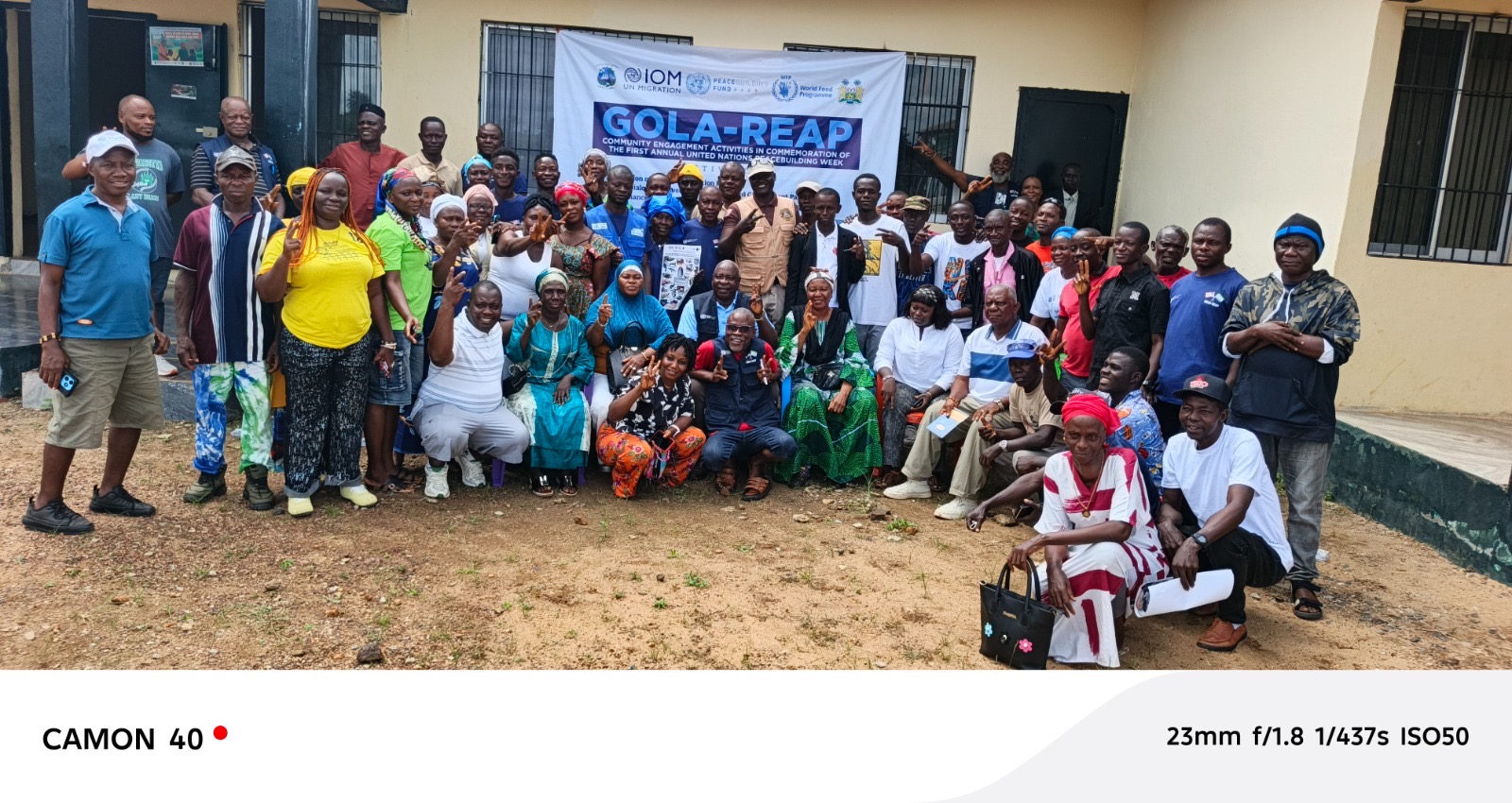
Monrovia, Liberia — Community leaders, government representatives, and development partners have endorsed Community Action Plans (CAPs) for Porkpa, Tewor, and Kungba Districts following a series of community engagement activities conducted in June and July under the GOLA-REAP (Resilience, Empowerment, Access and Peacebuilding) Project.
The project is jointly implemented by the International Organization for Migration (IOM) and the World Food Programme (WFP) with funding from the United Nations Peacebuilding Fund (PBF) and oversight from the United Nations Peacebuilding Support Office (PBSO).
The activities brought together 124 stakeholders, including community leaders, women, youth, traditional authorities, government officials, and development partners to validate local development priorities and strengthen community ownership of the CAPs.
“For the first time, our communities have a clear roadmap that reflects our own priorities and concerns.
The Community Action Plan gives us a shared direction and strengthens our commitment to work together with government and partners to build peace, improve governance, and promote sustainable development in our communities,” said Madam Isatta Massaquoi, Acting District Commissioner of Porkpa District.
The engagement process included community validation sessions, government consultations, and community–government dialogues, creating opportunities for citizens to raise concerns related to land and forest governance, mining impacts, environmental protection, and community participation in decision-making. Government representatives committed to promoting stronger consultation, improved resource governance, increased accountability, and enhanced environmental oversight.
Speaking on behalf of the Ministry of Local Government, Hon. William Jallah, Sr., Assistant Minister for Culture and Traditions, commended community leaders and citizens for their active participation and collaboration throughout the process.
He acknowledged persistent challenges, including poor road infrastructure and governance concerns in the mining and forestry sectors, while reaffirming the Ministry’s commitment to working with relevant institutions and partners to support implementation of government-related actions contained in the Community Action Plans.
Community and local leaders also participated in training on peacebuilding, conflict management, governance, leadership, accountability, and the Local Government Act of 2018, strengthening their capacity to support peaceful coexistence and community development.
To sustain progress, the project established a network of Community Early Warning and Project Monitors to support conflict prevention, monitor project implementation, strengthen accountability, and capture community feedback.
Sheikh Kamara, Executive Director of the Liberia Peacebuilding Office, described the Community Action Plans as practical roadmaps for promoting peace, social cohesion, and development, emphasizing that lasting peace begins within communities.
He reaffirmed LPBO’s commitment to working closely with county and district stakeholders to support and monitor implementation of the plans.
Looking ahead, project implementers and government partners will focus on printing and distributing the finalized Community Action Plans, strengthening early warning systems, addressing key community concerns such as forest boundary disputes, and supporting the implementation of priority actions identified by communities.
These next steps are expected to further enhance collaboration between citizens and government institutions while advancing peace, good governance, and sustainable development across the Gola Landscape.