



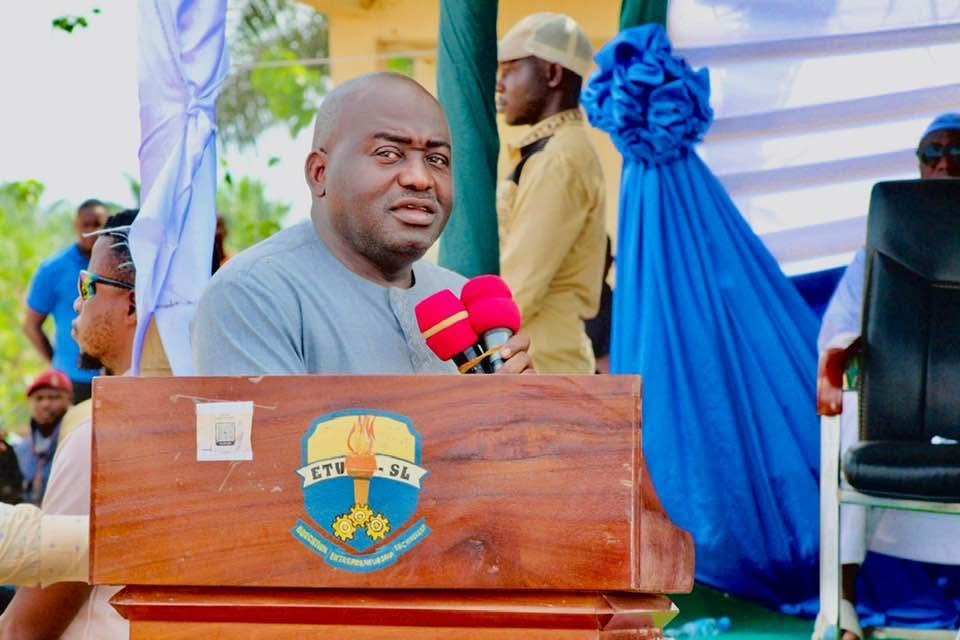
Monrovia, January 13, 2026 — Nimba County District 7 Representative Musa Hassan Bility has announced his opposition to the ratification of ArcelorMittal Liberia’s (AML) Mineral Development Agreement (MDA) Amendment No. 3, citing concerns that the proposed deal, in its current form, fails to adequately protect Liberia’s long-term national interests.
Rep. Bility made clear that his position is not rooted in opposition to foreign direct investment or the mining sector. He said Liberia urgently needs productive capital, job creation, and infrastructure development, including rail and port modernization. However, he argued that such investments must be lawful, transparent, enforceable, and structured to deliver measurable benefits to the Liberian people.
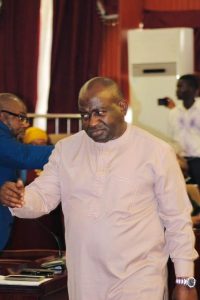
“The proposed amendment does not meet the standard required of the Legislature to safeguard public revenue, uphold our laws, and protect the national interest,” Bility said.
Among his key concerns is the length of the proposed agreement, which would extend AML’s concession to December 20, 2050, with provisions for further extension. Bility described this as a “generational contract” that could significantly weaken Liberia’s leverage and constrain future governments’ ability to renegotiate terms in line with changing national priorities.
He also criticized provisions that would replace statutory mining payments with a fixed contractual figure. Under the amendment, beginning in 2031, AML would pay surface rent and a fixed annual mining license fee of US$500,000 in lieu of statutory Class A Mining License fees. According to Bility, this arrangement poses serious revenue risks, undermines Liberia’s fiscal framework, and could set a dangerous precedent for other concessions.
Bility further warned that the amendment risks turning Liberia’s rail and port infrastructure into a private chokepoint. He emphasized that these assets are strategic national corridors that should support broader economic development and attract additional investors, not serve primarily the interests of a single company. He argued that the agreement lacks sufficiently strong guarantees for independent regulation, transparent tariffs, and nondiscriminatory access.
On community development, the lawmaker said the amendment’s references to a Social Infrastructure Plan are weak and largely unenforceable. He described the approach as a “donation model” rather than a binding set of obligations backed by strong enforcement mechanisms to protect affected communities.
The representative also raised broader concerns about governance, land rights, transparency, and accountability, arguing that an agreement of this magnitude must fully align with constitutional responsibilities and lawful land processes.
While opposing the amendment as currently drafted, Bility said he would support a revised agreement if key changes are made. He outlined minimum conditions for approval, including restructuring rail and port infrastructure under a regulated framework with clear government oversight, aligning all fees with existing Liberian statutes, strengthening performance obligations and penalties, making community commitments binding and escrow-backed, and introducing periodic public interest and fiscal review clauses.
Bility concluded by reaffirming that Liberia’s natural resources belong to the Liberian people and that the Legislature’s responsibility goes beyond approving agreements to ensuring they are transparent, enforceable, and genuinely beneficial to the nation.
“The duty of this Legislature is not merely to ratify,” he said, “but to ratify agreements that truly serve Liberia.”

