
3 min read
KAKATA, Liberia — On a humid afternoon in Kakata, a message cutting through radio waves and social media platforms across Margibi County was neither cautious nor conciliatory. It was a challenge to Liberia’s young people.
John Saylay Singbae II urged youths to stop waiting for politicians to rescue them, stressing that meaningful change would not come from political elites but from their own collective action. According to him, politicians will never do for the youth what they can do for themselves.
Singbae, a native of Margibi County and an emerging figure in Liberia’s youth political circles, spoke less as a commentator and more as a provocateur. In a country where more than half of the population is under the age of 35, young people have historically been central to political mobilization while remaining largely excluded from real political power. His message directly confronted that imbalance.
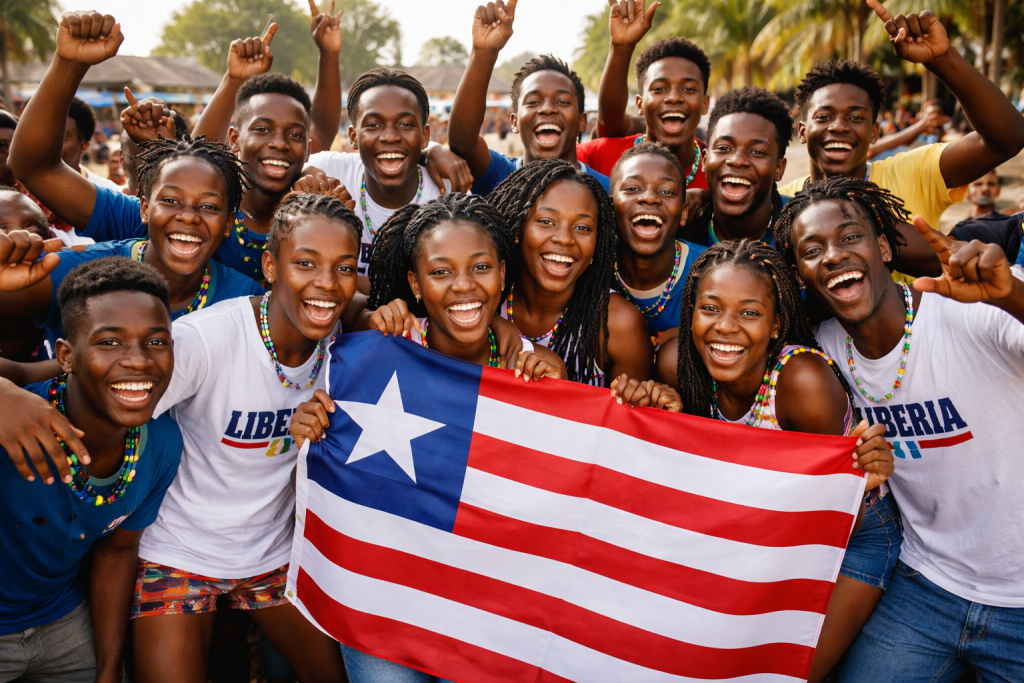
He argued that for decades Liberia’s youth have been treated as expendable foot soldiers in political contests—mobilized during election campaigns, used as personal security, and abandoned once political victories are secured. Many young people, he noted, dedicate their lives to protecting politicians who later rise to positions of power, only to leave those same youths in desperation.
Singbae accused political elites of deliberately maintaining youth dependency through unemployment, tribal division, patronage systems, and even drug abuse. He suggested that young people are feared because of their numbers and potential, and that once they become conscious of their collective power, they will no longer submit unquestioningly to traditional political authority.
His comments follow months of quiet but focused organizing across the country. Prior to returning to Kakata, Singbae traveled to university campuses, community centers, labor unions, and youth organizations nationwide. His stated objective was not to create a personality-driven movement, but to help young Liberians recognize and organize their collective influence.
On the structure of the movement he is promoting, Singbae emphasized that it is not centered on individual leadership. Instead, he described it as a nationwide effort drawing participation from all 15 counties, as well as the Liberian diaspora. He characterized the initiative as a final beacon for young people to transition from rally participants and street mobilizers into policymakers and national leaders.
The message appears to be gaining traction. In less than three months, the movement has attracted a growing base of young supporters, many of whom express readiness for sustained political engagement rather than sporadic protest.
Liberia’s postwar political environment has often celebrated youth participation in rhetoric while excluding young people from meaningful decision-making. Analysts say this contradiction has contributed to frustration, political apathy, and cycles of manipulation. Within this context, Singbae’s intervention is viewed by supporters as timely and by critics as confrontational.
For Singbae, the issue remains straightforward. He maintains that political power has always resided with the youth, but that it has too often been used against them rather than by them.
Whether this call will lead to lasting political change remains uncertain. What is increasingly clear, however, is that in Kakata and beyond, a growing number of young Liberians are beginning to ask a difficult but consequential question: if they form the majority, why are they still waiting for permission to lead?
