6 min read
“BURNING ALIVE”: LIBERIA HAS NO FIRE SERVICE TO SAVE IT, 9 COUNTIES HAVE NO FIRE TRUCK, CHILDREN ARE DYING IN FLAMES, AND THE FIRE SERVICE THAT TOOK $2.9 MILLION CANNOT EVEN INVESTIGATE THE BURNING OF ITS OWN CAPITOL
BY: Rufus Divine Brooks Jr.
KMTV Investigative Desk | Monrovia, Liberia — November 3, 2026
MONROVIA — If your house catches fire today in Liberia, no one is coming to save you.
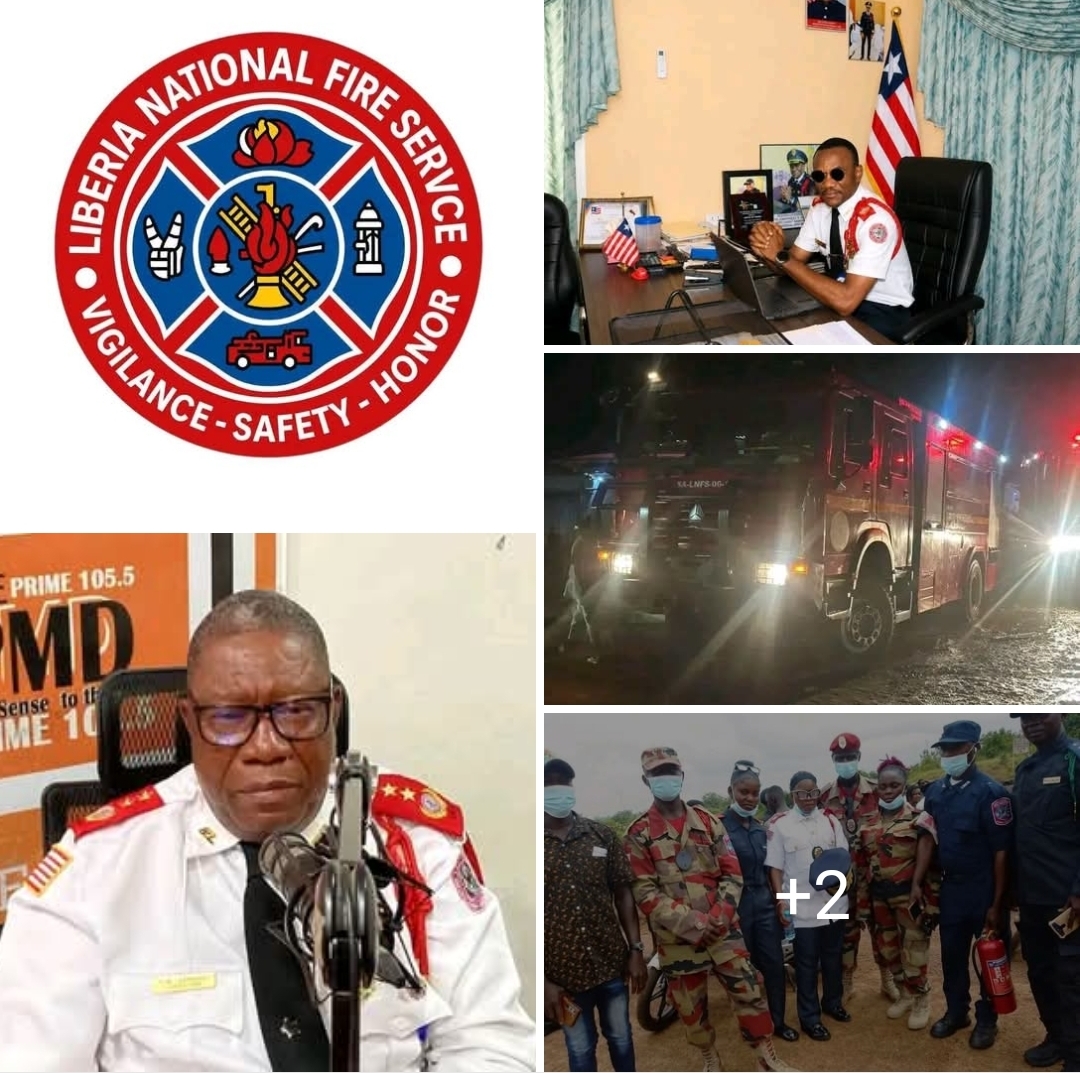
That is the stark finding of a KMTV investigation into the Liberia National Fire Service (LNFS), drawn from the Service’s own admissions, national budget documents, court testimony, and a trail of preventable deaths across the country.
Liberia, a nation of more than five million people with crowded markets, schools, hospitals, fuel stations and government ministries, cannot put out a fire, It can only watch one burn.
On August 17, 2026, LNFS Director General Col. G. Warsuwah Barvoul Sr. traveled to Gbarnga, Bong County, to commission a new fire station.
Standing before residents and journalists, he admitted what many Liberians already knew from painful experience:
Only six of Liberia’s fifteen counties have fire trucks while Nine counties have none at all.
Bong County itself had not received a fire engine since 1964 — a 62-year wait.
The new station in Gbarnga was not built by the government.
It was built with personal funds by Bong County Senator Prince Moye, who pledged to lobby President Joseph Boakai for more trucks and better pay in the 2027 budget.
Neither Moye nor Barvoul could say when the other nine counties would receive help.
Barvoul was blunt about the condition of his own institution:
“We are underpaid, We take risks to protect lives, but we are being paid small money.”
He acknowledged that some of the few trucks the Service still operates are no longer in good working condition, and that Monrovia’s fire hydrants are no longer operational.
A fire service without trucks, without hydrants, without water, and with underpaid personnel is not a fire service, It is a uniform without a mission.
KMTV reviewed the Fiscal Year 2026 Draft National Budget, a US$1.2 billion spending plan presented to the Legislature on November 7, 2025, by Finance Minister Augustine Kpehe Ngafuan.
Every major security agency received an increase except the Fire Service.
The Liberia National Police rose from US$21.5 million to US$25.7 million.
Immigration rose from US$7.4 million to US$10.7 million.
The Liberia Drug Enforcement Agency more than doubled, from US$3.1 million to US$7.6 million.
The National Security Agency rose from US$13.9 million to US$22.2 million.
The Liberia National Fire Service remained frozen at US$2.9 million — unchanged from the previous year.
While the state invested more to protect itself, it invested nothing more to protect citizens from burning to death.
Even in 2024, when the Fire Service budget briefly rose to US$4.1 million, only US$1.4 million was allocated for transport equipment.
In August 2025, the Service unveiled what it called modernization: motorbikes donated by a private company to help firefighters reach fire scenes faster while trucks were dispatched.
Motorbikes cannot carry water, they cannot carry foam and they cannot save a burning house.
In Liberia, firefighters have been reduced to riding motorbikes to watch fires burn.
In March 2026, fire gutted three businesses on Gbarnga Broad Street — Paulma Store, Up Steps Entertainment Center, and West Africa Enterprise.
It burned for more than two hours, More than 50 people stood helpless With no fire truck, some threw bottled water at the flames.
Two months later, in May 2026, a midnight fire in Gbarnga’s Chief Compound Community trapped two small boys inside a five-bedroom house.
Four-year-old Clarence and five-year-old Dennis died, No fire service could save them.
On July 12, 2025, fire on Du-Port Road in Paynesville killed three children and a pregnant woman.
The woman escaped with severe burns, was rushed to John F. Kennedy Memorial Hospital, and later died. The cause remains undetermined.
On April 29, 2026, fire gutted eight stores at Red Light.
It burned for several hours while Deputy Director for Operations Col. P. Edwin Tisdell later admitted limited resources hampered the response.
On October 29, 2026, fire destroyed a family home in the FDA Doe Estate Community.
Children left behind appealed to government and humanitarian organizations for help. The cause was never established.
In December 2025, explosions rocked the Sethi Chemical warehouse in Gardnersville, Iron Factory.
The Fire Service launched “Operation Save the Community” using aqueous film-forming foam while Residents feared chemical exposure for weeks.
And in September 2019 the CDC Administration, Liberia suffered its worst fire disaster in modern history when fire at an Islamic school in Paynesville killed 27 children.
An electrical fault was blamed. The nation mourned, promised reform, and did nothing.
How many more children must die before fire is treated as national security?
The most damning indictment came from the burning of Liberia’s own Capitol Building.
On December 18, 2024, at 6:20 a.m., fire gutted the Joint Chamber, causing an estimated US$1.8 million in damage.
The Police and Fire Service quickly declared it arson, citing accelerants and multiple points of origin, and promised international experts would conclude the investigation.
Those experts arrived in February 2025 — three retired American fire chiefs from the Fire Rescue Alliance: Jerry Streich, Ken Prillaman, and Mark Lynde.
In court in December 2025, their report turned the case on its head.
Defense lawyers revealed the U.S. experts had described the LNFS investigation as incomplete, inaccurate, and inconsistent with modern fire science.
They said it lacked essential data on firefighting operations, failed to meet forensic evidence standards, and its conclusions were not supported by best-practice tactics.
The defense further alleged the prosecution withheld that report from the court, even though it had been submitted to Police Inspector General Gregory Coleman in March 2025.
The U.S. experts themselves concluded the fire was arson — with origin near the Speaker’s podium, eight one-gallon containers found near exits, and evidence of ignitable liquids.
But they also concluded Liberia’s own Fire Service could not prove it professionally.
If the Fire Service cannot credibly investigate the burning of the Capitol — the seat of government — how can any ordinary Liberian trust it to investigate the burning of their home?
The silence did not stop there, the October 2023 fire at the Ministry of Finance was promised an investigation.
Findings were never released, When fire damaged former President George Weah’s residence on 9th Street in September 2025, Fire Service investigators were denied access to the house.
A fire service that does not publish reports is not a fire service, it is a secret.
What KMTV Found?
KMTV is not blaming the firefighters on the ground.
They are brave men and women, underpaid, exposed to smoke without proper medical care, and sent to infernos with buckets, motorbikes, and broken trucks.
KMTV is blaming the system that abandoned them: a government that freezes their budget while doubling others, a leadership that celebrates motorbikes as progress, and a country where senators must build fire stations with their own money because the state will not.
Liberia does not have a Fire Service, It has a Fire Watching Service.
And until Liberia funds it like lives depend on it — because they do — every market woman in Waterside, every child sleeping in Gbarnga, and every family in Monrovia is living one spark away from disaster.
KMTV is calling for A full legislative audit of the LNFS budget from 2024 to 2026.
The immediate publication of all fire investigation reports from 2023 to 2026.
The delivery of fire trucks to the nine counties with nothing — before the next child dies.