5 min read
CARE TREATS OVER 1,000 IN MARGIBI FOR FREE, PROMISES DENTAL CARE NEXT, AND TAKES THE FIGHT AGAINST DRUGS DIRECTLY INTO DON BOSCO HIGH SCHOOL
CEO Konrad Barjuah says free medical and eye-care outreaches are not charity — they are survival for underserved Liberians who cannot afford to get sick.
BY: Rufus Divine Brooks Jr.
MONROVIA, Liberia — In many parts of Liberia, getting sick is not just a health problem, It is a financial crisis.
A trip to the hospital can mean transport money a family does not have, consultation fees it cannot afford, drugs it cannot buy, and days of lost work it cannot spare.
So many Liberians do what they have always done: they wait, they pray, they endure And sometimes, they die from conditions that could have been treated for free.
That is the gap Community Action for Reintegration (CARE) is trying to close — one community, one outreach, one patient at a time.
Speaking to journalists in Monrovia on Tuesday, CARE Chief Executive Officer Konrad Barjuah reaffirmed his institution’s commitment to improving access to healthcare for Liberians through regular free medical outreaches and other community-based health interventions.
It was not a new promise, It was a renewal of a promise CARE is already keeping.
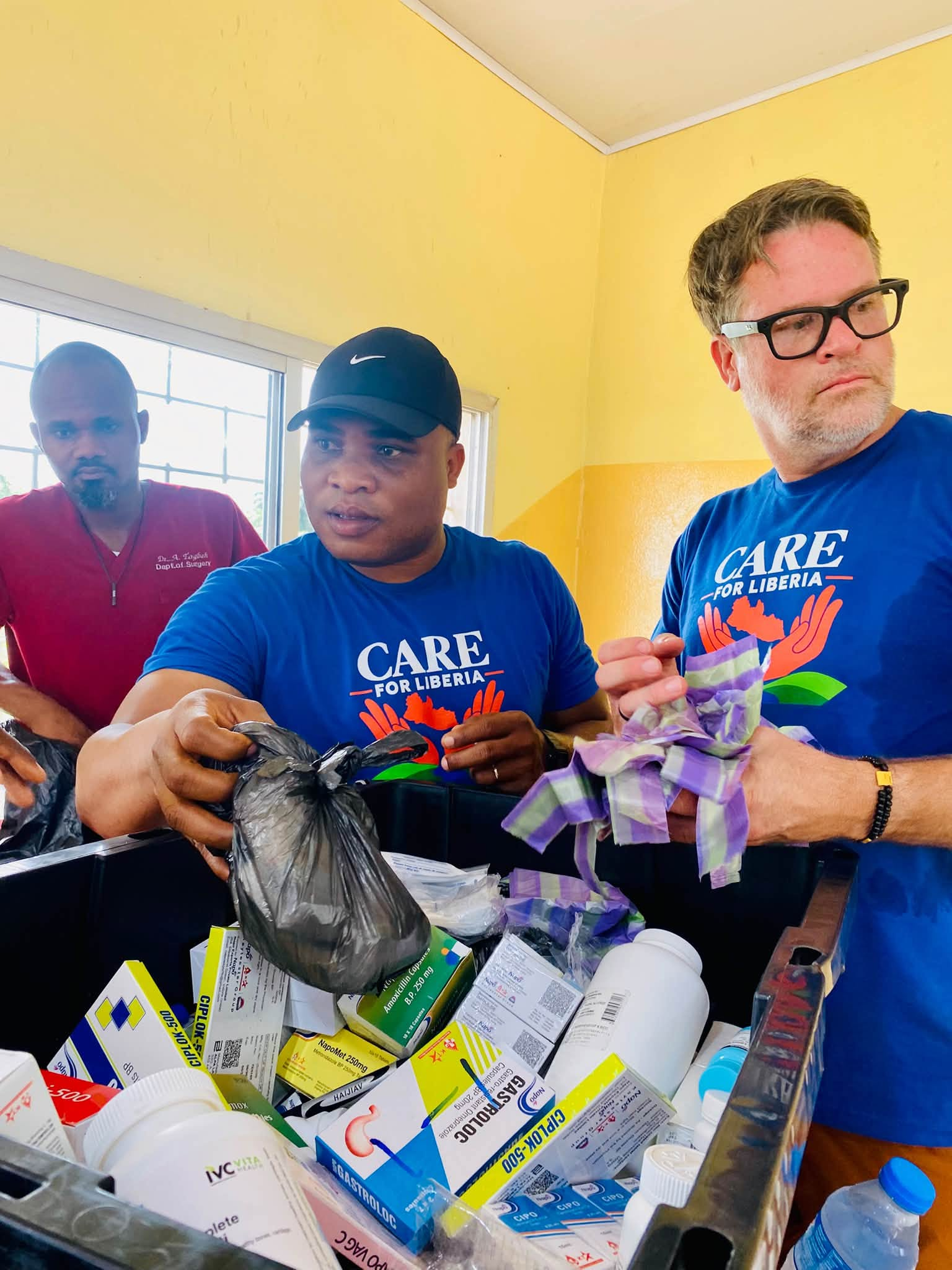
Just days ago, more than 1,000 residents of Margibi County benefited from a free medical and eye-care outreach organized by CARE.
For many of them, it was the first time in months — or years that they had seen a doctor, had their blood pressure checked, had their eyes examined, or received basic medication without paying.
They came with malaria symptoms, hypertension, eye infections, untreated wounds, and questions they had been carrying for too long.
They left with consultations, treatment, glasses, referrals, and perhaps most importantly the feeling that someone remembered them.
Barjuah said the Margibi outreach is part of CARE’s ongoing efforts to complement the government’s commitment to addressing the healthcare needs of citizens, particularly those in underserved communities.
“Access to quality and affordable healthcare remains a major concern for many communities,” Barjuah said. “We cannot sit and wait, We must go to the people.”
In a country where the public health system is stretched thin — where JFK, Redemption, and county hospitals are overcrowded, understaffed, and underfunded — CARE’s model is simple but powerful; If the people cannot reach the hospital, take the hospital to the people.
Meanwhile, Barjuah disclosed that CARE is expected to introduce dental care services as part of its efforts to broaden the range of healthcare interventions available to Liberians.
Dental care is one of the most neglected areas of health in Liberia.
A toothache is often treated with painkillers, herbal remedies, or simply endurance until it becomes an infection, an abscess, or a life-threatening complication.
By adding dental services to its outreaches, CARE is addressing a silent crisis that affects children who cannot eat or concentrate in school, adults who cannot work, and elderly people who suffer in silence.
It is a recognition that health is not just malaria and eye-care, Health is the whole body and Health is dignity.
But CARE’s work is not only about medicine, It is also about prevention and about protecting Liberia’s future: its youth.
Barjuah revealed that CARE has engaged a team of volunteers to conduct peer-pressure and drug-awareness education at Don Bosco High School in Monrovia.
The initiative is intended to educate students about the dangers associated with substance and alcohol abuse while encouraging them to make informed and responsible decisions.
In Liberia today, drug abuse particularly kush, alcohol, tramadol, and other substances is destroying young lives, breaking families, and fueling crime and school dropouts.
It is a crisis that no hospital can cure alone. It must be prevented in classrooms, in homes, and in communities.
“We want to empower young people with the knowledge and confidence to resist negative peer influence,” Barjuah said.
“We want them to understand that one bad decision can undermine their health, their education, and their future opportunities.
The campaign at Don Bosco is not a lecture, It is a conversation volunteers speaking peer-to-peer, sharing real stories, answering real questions, and giving students tools to say no when the pressure is highest.
If it works at Don Bosco, CARE hopes to take it to more schools across Liberia.
CARE’s work is landing at a critical moment for Liberia.
The World Bank’s latest Economic Update, released this week, shows Liberia’s economy grew 5.1% in 2025 — but growth has not yet translated into jobs, income, or better living standards for most Liberians.
For families living on the edge, healthcare is still a luxury.
At the same time, the Freeport crisis, rising market prices, and overstretched public hospitals mean ordinary Liberians are being squeezed from every side.
In that context, a free medical outreach is not charity, It is survival, it is a mother getting her child’s eyes checked before he goes blind.
It is a grandmother getting her blood pressure treated before she has a stroke.
It is a student learning to say no to drugs before addiction steals his future.
Barjuah emphasized that CARE will continue to explore initiatives that promote community well-being, youth development, and improved access to essential social services across Liberia.
He stressed the importance of partnerships with government, with health workers, with volunteers, with communities themselves — to bridge existing gaps in the country’s healthcare delivery system.