


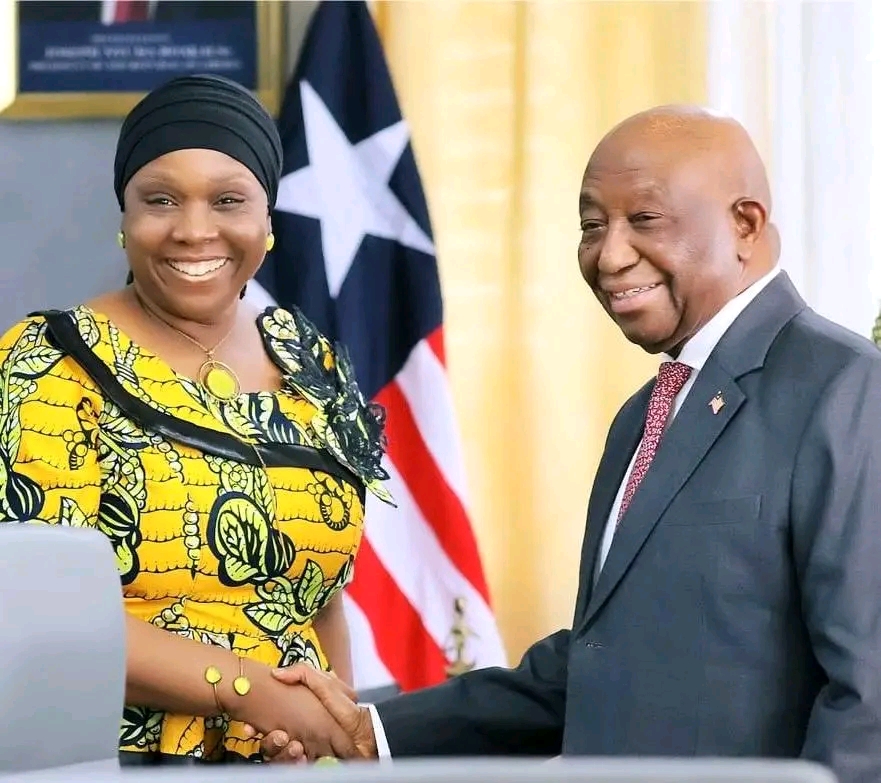
MINISTER OF FOREIGN AFFAIRS MADAM SARA BEYSOLOW NYANTI REAFFIRMS COMMITMENT TO MIDDLE‑EAST PEACE AT UN SECURITY COUNCIL DEBATE IN NEW YORK, USA
By: Rufus Divine Brooks Jr. -rufusbrooks091@gmail.com
Monrovia, Liberia- Jan. 29, 2026 — Liberian Foreign Minister Sara Beysolow Nyanti used a high‑profile United Nations Security Council (UNSC) open debate on the Middle East to reiterate Liberia’s willingness to work with Council members on concrete, people‑centered initiatives that could help thaw a region mired in conflict.
Speaking before diplomats on Wednesday, UN officials and representatives of civil‑society groups at the United Nations Headquarters in New York, Nyanti said Liberia stands ready to be a constructive partner in any effort that advances a durable peace in Gaza, the West Bank and broader Arab‑Israeli tensions.
Liberia believes that the path to lasting stability must be paved with humanitarian relief, confidence‑building and inclusive peacebuilding,” Nyanti told the assembly.
“We urge the UNSC to expand regular humanitarian corridors into Gaza and other conflict‑affected zones, and to support UN‑led mechanisms that can foster trust between the parties.”
The minister’s remarks came amid renewed calls from the United Nations and a coalition of humanitarian NGOs for a larger, more predictable flow of aid into Gaza, where a United Nations‑run humanitarian corridor has operated intermittently since the latest escalation.
Nyanti highlighted the critical need for regular, protected routes that would allow food, medical supplies and fuel to reach civilians without delay or interference.
She cited Liberia’s own experiences in post‑conflict reconstruction as a testament to the power of coordinated humanitarian assistance”.
“When we emerged from our own civil wars, the world’s willingness to provide aid saved countless lives. We owe the same to the people of Gaza,” she said.
Beyond immediate relief, Nyanti advocated for a suite of confidence‑building measures (CBMs) facilitated by UN peacebuilding agencies.
She referenced the United Nations Office for the Coordination of Humanitarian Affairs (OCHA) and the Department of Political and Peacebuilding Affairs (DPPA) as essential partners in designing and monitoring steps such as: Prisoner‑of‑war exchanges under UN supervision, Joint de‑mining projects involving Israeli and Palestinian engineers and People‑to‑people dialogue programs that bring together civil‑society leaders from both sides.
The UNSC is slated to convene a closed‑door session next week to discuss a possible resolution that would formalize expanded humanitarian corridors and endorse a roadmap of confidence‑building steps.

