2 min read
Boakai Adds 10,000+ Chiefs to Gov’t Payroll in Historic July 1 Move, Deploys County Buses for Traditional Leaders
BY: Rufus Divine Brooks Jr.
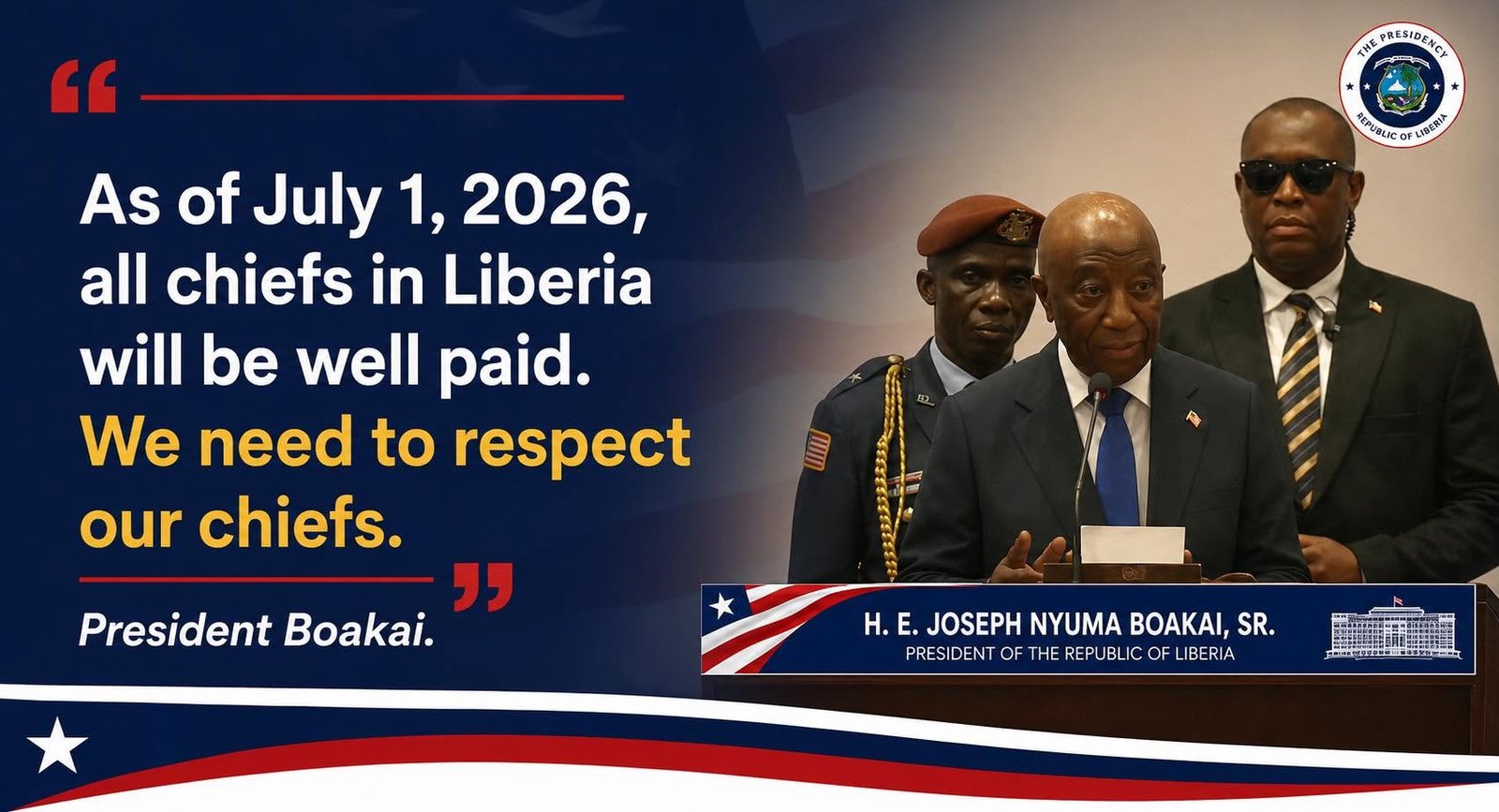
MONROVIA — President Joseph Nyuma Boakai has announced that all appointed chiefs across Liberia’s 15 counties will be placed on the government payroll effective July 1, 2026, in what officials describe as the most significant reform for traditional leadership since the end of Liberia’s civil conflict.
The directive will see paramount, clan, and town chiefs who have long served as the primary link between rural communities and central government begin receiving monthly salaries through the national payroll system.
For decades, chiefs have performed critical governance functions without formal remuneration, relying largely on community support and sporadic stipends.
Speaking on the decision, President Boakai said the move is intended to strengthen local governance structures, improve the welfare of traditional leaders, and enhance their participation in national development.
In addition to salaries, the President disclosed that the government will provide buses in every county to facilitate transportation of chiefs and elders to official government functions, district council meetings, and development engagements.
Officials say the transport provision addresses a long-standing challenge that has limited rural leaders’ access to county and national-level decision-making.
The Ministry of Internal Affairs, which oversees traditional governance, will coordinate implementation with the Ministry of Finance and Development Planning to ensure timely payroll integration by July 1.
The announcement has drawn praise from traditional leaders, civil society groups, and county officials. Many described it as a “historic milestone” that formally integrates Liberia’s dual governance system.
Chiefs play a central role in dispute resolution, land administration, and mobilizing communities for development projects, particularly in areas where state institutions remain weak.
Advocates argue that formal salaries will reduce financial hardship, improve accountability, and reduce dependence on external actors.
Government officials noted that recognizing chiefs financially is also a step toward decentralization and aligning with the Local Government Act, which emphasizes empowered local authorities.