3 min read
Deputy Minister Myers Pushes for Deeper PFM Reforms, Backs Medium-Term Budgeting to Fix Liberia’s Fiscal Gaps
BY: Rufus Divine Brooks Jr.
MONROVIA — Deputy Minister for Fiscal Affairs at the Ministry of Finance and Development Planning, Hon. Anthony G. Myers, has called for deeper reforms in Liberia’s public financial management system, urging stronger spending controls, adoption of medium-term budgeting, and greater accountability across government institutions.
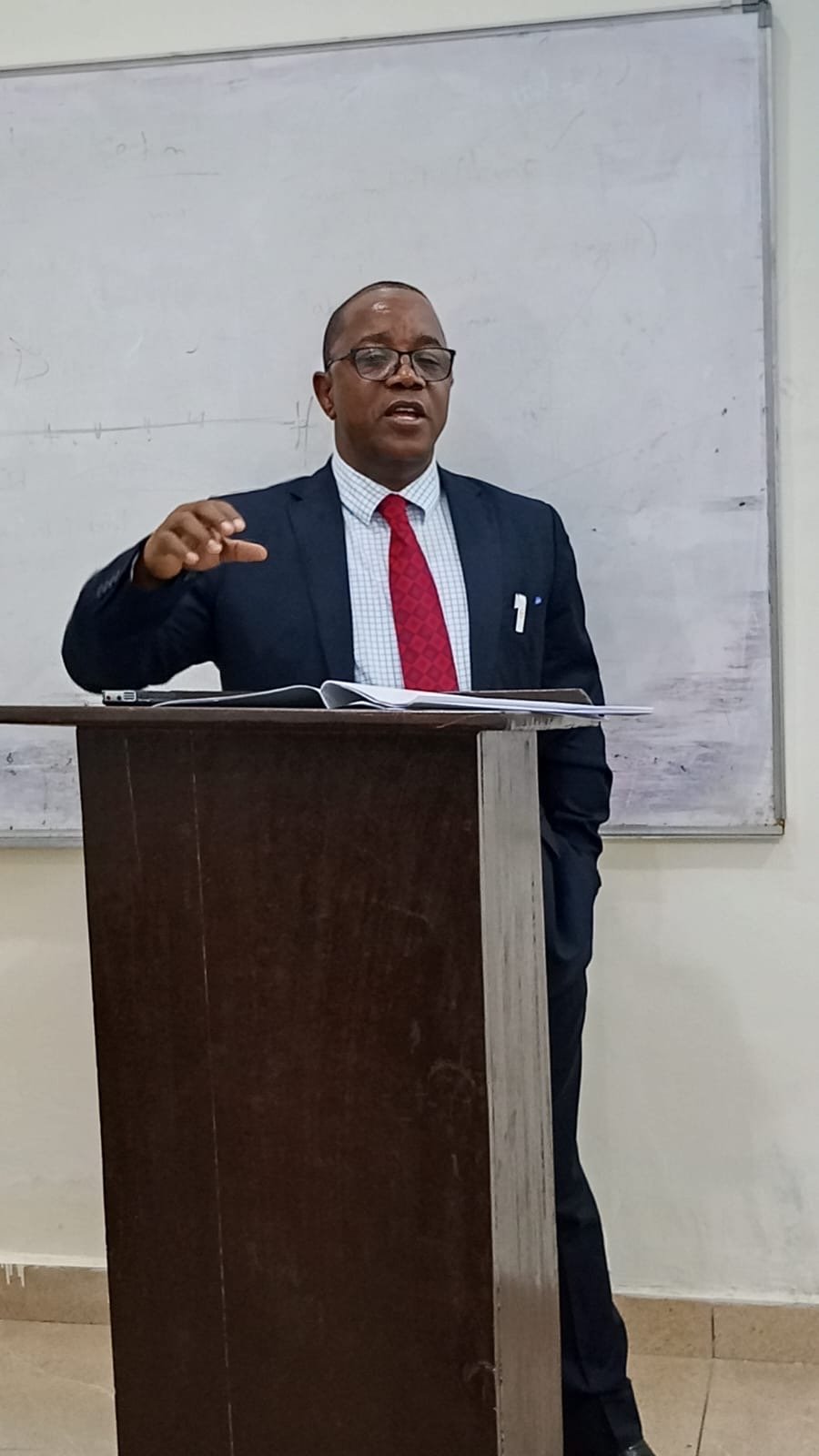
Speaking at the Banking Institute, during a lecture on “Stewardship and Accountability: Leadership in Public Financial Management,” Myers shared technical insights on budget execution, fiscal discipline, and revenue management as part of government’s ongoing reform drive.
A key focus of his presentation was clarifying the difference between a budget surplus and a “balance brought forward.” Myers explained that a surplus occurs when government deliberately spends less than projected revenue, creating savings for future needs.
A balance brought forward, however, results from allocated funds remaining unspent due to procurement delays or administrative bottlenecks.
“While both represent excess resources, they are fundamentally different concepts,” he told students and financial professionals. “One reflects fiscal discipline, the other reflects inefficiency.”
Myers outlined the Ministry’s expenditure control process, describing his coordination role between the Budget Department, the Controller and Accountant General’s office, and the Central Bank of Liberia.
Before monthly spending ceilings are approved, officials assess available cash, projected revenues, and outstanding obligations to ensure spending stays within resources.
He noted that under Liberia’s Public Financial Management Law, the President is the ultimate manager of public finances, while operational responsibility rests with the Minister of Finance.
Although the Minister holds broad approval powers, those can be formally delegated to improve efficiency and ensure continuity during emergencies.
Addressing longstanding salary disparities for financial controllers and public financial managers, Myers acknowledged the gap but said immediate harmonization is not fiscally feasible.
He said government is pursuing gradual reforms and exploring non-monetary incentives — transportation support, fuel allowances, improved working conditions — to attract and retain skilled professionals.
On accountability, he stressed that even when senior officials issue verbal instructions in emergencies, proper documentation must eventually be produced to maintain transparency and comply with financial regulations.
Using an analogy, Myers compared government finance to breathing: taxation temporarily removes money from the economy, but government spending returns it through salaries, procurement, and services. “Delays in spending disrupt economic activity and slow growth,” he warned.
Proposed Reforms: MTEF and Legislative Restraint:
Myers proposed two major reforms to strengthen Liberia’s PFM framework:
- Reduce legislative changes to executive budget proposals to improve predictability and planning.
- Adopt a Medium-Term Expenditure Framework (MTEF) so major infrastructure projects can be approved over multiple years instead of annual reauthorization, which often delays implementation.
He also acknowledged persistent challenges with government account reconciliation.
A joint team from the Liberia Revenue Authority, Central Bank, and Ministry of Finance has reduced discrepancies, but Myers suggested independent financial or forensic experts could help resolve remaining issues.
Call to Young Professionals:
Encouraging students to pursue careers in economics and public finance, Myers said managing public resources requires discipline, perseverance, technical competence, and integrity.
He reminded participants that public servants must expect scrutiny and remain committed to transparency and responsible stewardship.
The lecture was part of the Banking Institute’s professional development program aimed at strengthening leadership and technical capacity in public financial management and governance.