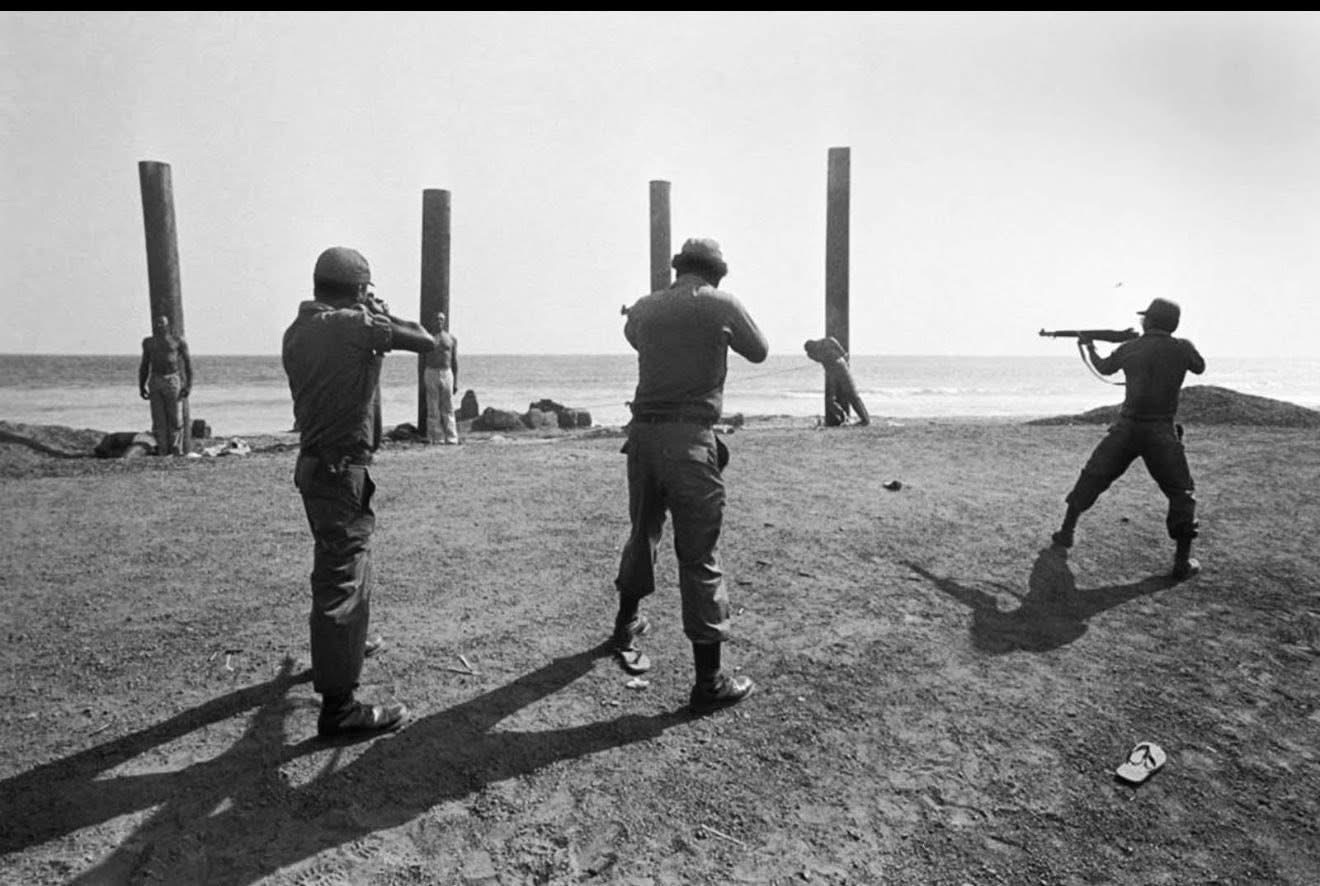
3 min read
April 22, 1980, is not just a date in Liberian history—it is a memory etched into the nation’s conscience. Ten days after the overthrow of President William R. Tolbert Jr., Liberia witnessed one of the most defining and sobering moments in its modern history.
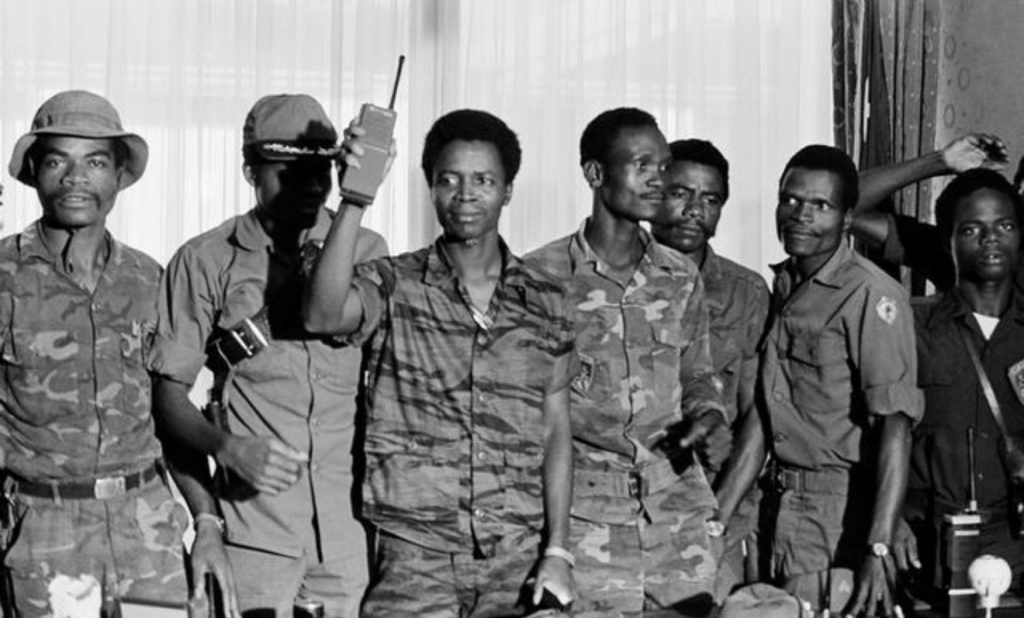
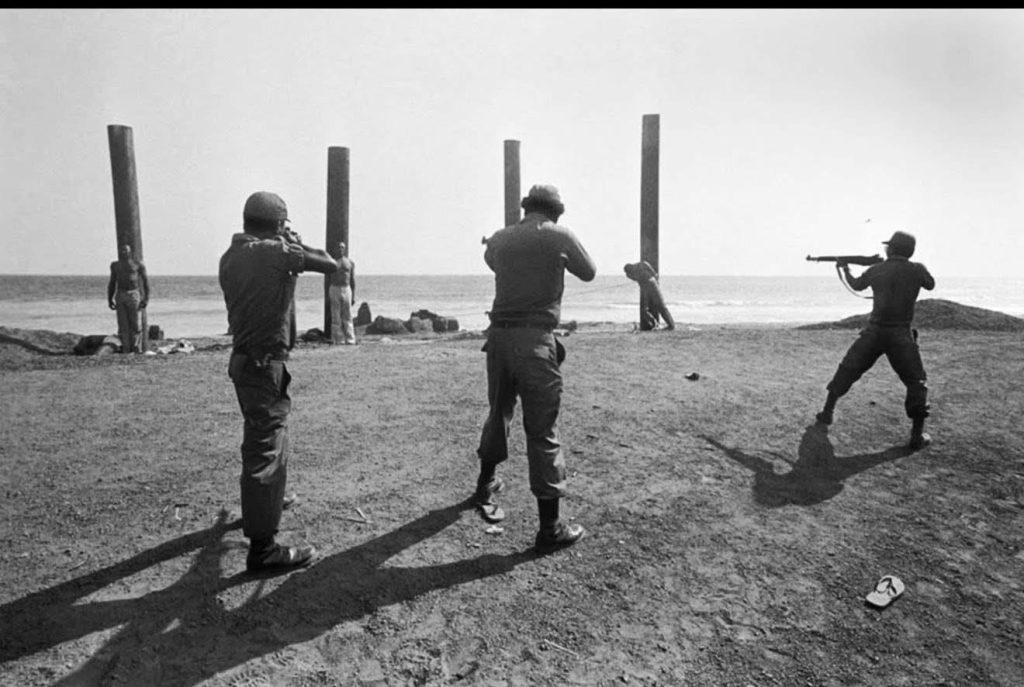
Under the authority of the People’s Redemption Council, led by Master Sergeant Samuel K. Doe, thirteen senior officials of the Tolbert administration were taken to the beach in Monrovia—now PHP Park—and executed by firing squad in full public view.
The 13 Executed Officials
These were not ordinary figures. They were central pillars of the Liberian state—men who had occupied the highest levels of governance:
- Cecil Dennis – Minister of Foreign Affairs
- Richard A. Henries – Speaker of the House of Representatives
- Frank J. Stewart, Sr. – Director of the Budget
- John W. Sherman – Assistant Minister of Commerce and Trade
- P. Clarence Parker II – Chairman, National Investment Council; Treasurer, True Whig Party
- James A.A. Pierre – Chief Justice of the Supreme Court
- Joseph J. Chesson, Sr. – Minister of Justice and Attorney General
- Cecil Bright – Former Minister of Planning and Economic Affairs
- Charles T.O. King – Deputy Minister for Agriculture
- David Franklin Neal – Minister of Planning and Economic Affairs
- Frank E. Tolbert – President Pro-Tempore of the Senate
- E. Reginald Townsend – National Chairman, True Whig Party
- James T. Phillips – Former Minister of Finance and Agriculture
Cecil Dennis, notably, was reported to have faced his execution with remarkable composure—uttering a prayer and staring down the firing squad, a moment that has remained deeply symbolic in Liberia’s historical memory.
Justice or Vengeance?
The executions were officially justified as punishment for treason, corruption, and abuse of power. For many, especially those who had long felt excluded under the True Whig Party system, this moment represented justice—swift and decisive.
But justice without process raises difficult questions.
The trials were military-led, rapid, and widely criticized for lacking due process. The international community responded with concern, questioning whether what occurred was accountability—or retribution.
A Nation Divided in Feeling
Liberians did not experience April 22 in the same way.
- For some, it marked a long-awaited reckoning—a dramatic end to decades of inequality.
- For others, it brought shock, fear, and deep unease.
Because beyond politics, the reality was stark: human lives were taken publicly, in a manner Liberia had never before experienced.
Survivors of the Tolbert Administration
While many were swept away by the coup and its aftermath, a few key members of the administration survived and later played significant roles in Liberia’s history:
- Ellen Johnson Sirleaf – Then Minister of Finance; later became Africa’s first elected female president
- Bennie Dee Warner – Vice President under Tolbert
- Florence Chenoweth – Minister of Agriculture
- Burleigh Holder – Minister of National Security
Their survival reflects the complexity of that period—where some were removed, others executed, and a few carried forward into Liberia’s future political evolution.
The Turning Point
April 12, 1980, changed Liberia’s leadership.
But April 22 changed Liberia’s political character.
It marked a shift—from governance rooted in institutions, however flawed, to one shaped by force and uncertainty. It introduced fear into the national psyche and redefined how power could be asserted.
Final Reflection
April 22, 1980, is not just about the execution of thirteen officials. It is about a nation confronting the consequences of sudden change without structured justice.
It reminds us that:
- Justice must be anchored in due process
- Power, when unchecked, can redefine a nation’s path
- And history, once made, continues to shape generations
Liberia remembers—not just the event, but the weight it left behind.
Because April 22 did not end on that beach.
Its echoes are still heard today.
