4 min read
ACCRA, GHANA – June 18, 2026 – Liberian President Joseph Nyuma Boakai, Sr. has called for a coordinated global effort to advance reparatory justice for the victims and descendants of the transatlantic slave trade, urging world leaders to transform a historic United Nations resolution into meaningful action.
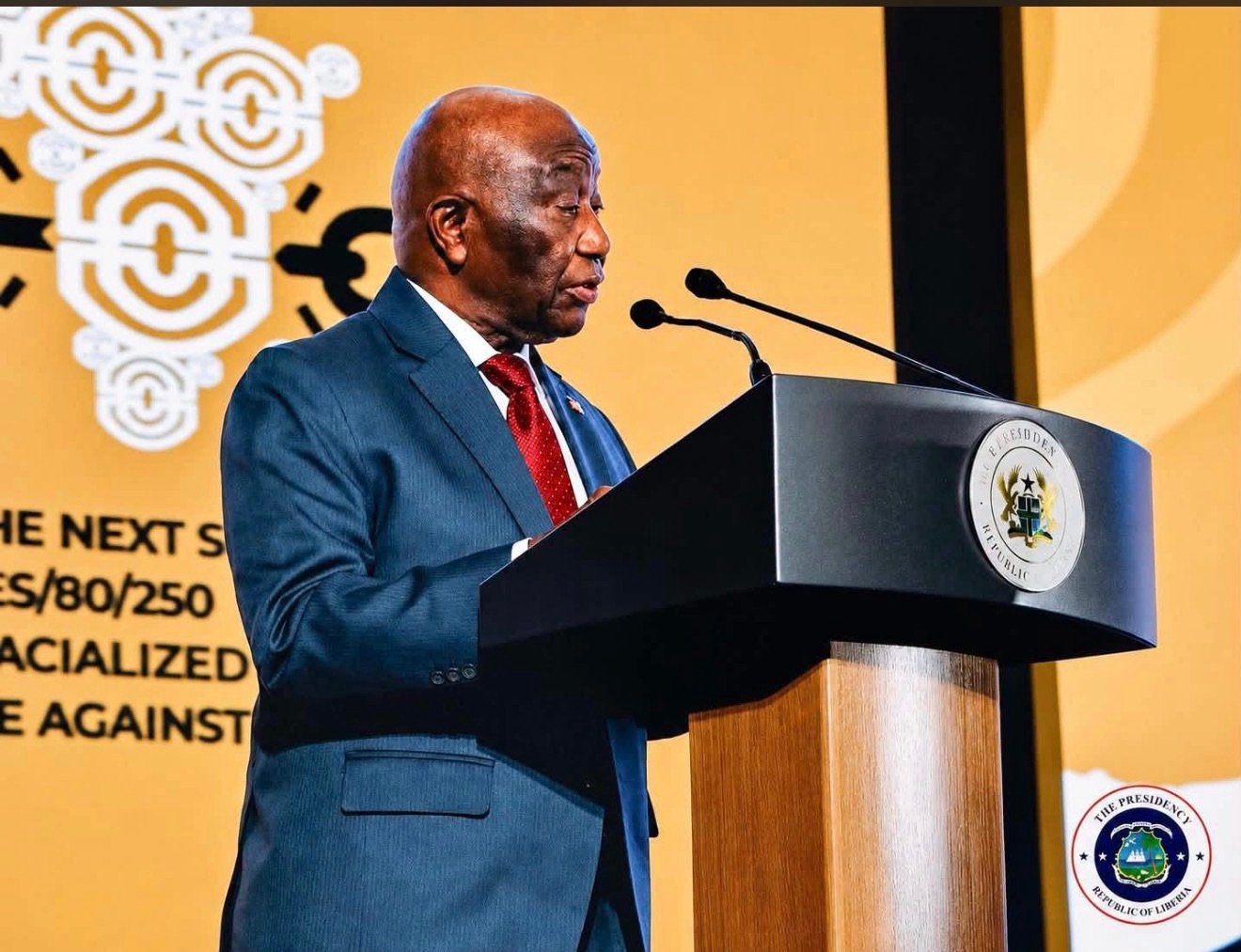
Speaking Thursday at a two-day High-Level Consultative Conference on the implementation of United Nations Resolution A/RES/80/250 in Accra, Ghana, President Boakai described the resolution as a landmark moment in the global pursuit of truth, justice, healing, and institutional repair.
Addressing fellow African leaders, representatives of the African Union, CARICOM, the Global African Diaspora, United Nations agencies, civil society organizations, and development partners, President Boakai said the world has reached a defining moment in confronting one of humanity’s gravest crimes.
“It is fitting that we meet on these historic shores, still marked by the memory of those who were torn from their homes, families, and communities and forced across the Atlantic,” President Boakai declared. “Their suffering still calls us to confront one of history’s gravest crimes against humanity.”
The conference was convened to discuss the next steps following the adoption of the UN resolution on March 26, 2026, which formally recognizes the trafficking and enslavement of Africans as among the gravest crimes against humanity.
President Boakai praised the international community for adopting the resolution, noting that it represents both a moral and historical milestone more than five centuries after the beginning of the transatlantic slave trade and two centuries after its formal abolition.
He stressed that the effects of slavery continue to shape societies today, extending far beyond economic losses to include deep social, cultural, psychological, and political consequences that have persisted across generations.
“For Liberia, the legacy of the transatlantic slave trade is woven into the fabric of our national story and continues to shape our understanding of identity, belonging, and nationhood,” he said.
The Liberian leader argued that reparatory justice must encompass more than financial compensation, emphasizing the importance of truth-telling, reconciliation, identity restoration, cultural healing, education, institution-building, and social cohesion.
As a member of the Global Advisory Panel on Reparatory Justice, President Boakai outlined five key priorities for implementing the UN resolution.
First, he called for the development of a common African position and implementation framework in partnership with CARICOM and diaspora organizations. Such a framework, he said, should include a coordinated roadmap with clear responsibilities and timelines.
Second, he proposed the establishment of an African Union–United Nations Expert Commission to design a Global Reparatory Justice Mechanism.
Third, he urged governments and institutions to combat misinformation and historical erasure through education, research, and the preservation of archives, while strengthening the teaching of African history across Africa and the diaspora.
Fourth, President Boakai advocated for the restitution of stolen cultural artifacts and heritage objects, alongside development partnerships aimed at addressing inequalities rooted in slavery and colonial exploitation.
Finally, he called for global initiatives and partnerships that tackle persistent underdevelopment and inequality linked to the legacy of slavery, emphasizing the need for shared responsibility and mutual respect.
“The slave trade and its aftermath contributed profoundly to inequality and underdevelopment in Africa and across the Global South,” the President stated. “The past has helped shape the inequities of the present.”
President Boakai emphasized that the movement for reparatory justice is not about assigning personal guilt to present generations but about acknowledging historical realities and fostering healing.
“We invite our partners across the world to share in our anguish, to recognize the enduring consequences of this historic injustice, and to join us in a common commitment to healing and repair,” he said.
In a passionate conclusion, the Liberian leader urged participants to seize what he described as a rare opportunity to shape history through decisive action.
“Let this not be remembered as another conference or another resolution that stirred consciences briefly before fading into history,” Boakai said. “Let it be remembered as the moment when the world chose truth over silence, justice over hesitation, and moral courage over the comfort of the status quo.”
The conference in Accra brings together policymakers, scholars, civil society leaders, and international organizations to chart a path forward for implementing the UN resolution and advancing the global conversation on reparatory justice for descendants of enslaved Africans.
President Boakai expressed confidence that future generations would judge the current generation not by its declarations but by its commitment to meaningful action, urging nations to unite in restoring dignity, repairing historical wrongs, and building a more equitable world.
